Ethnographic writing is composed of cases. Ethnographers don’t always think that way about their research, but what they are collecting are descriptions of events, processes, and interactions; interviews with individuals or conversations with groups; and reflections on experiences based on participant-observation. Cases can be singular, e.g., a specific, one-off event, or processual, e.g., a series of interactions with someone over time. The trick in ethnographic writing is to clearly isolate cases as cases and then to scale up from an individual case to an analysis that demonstrates the representativeness (or exceptionality) of a case.
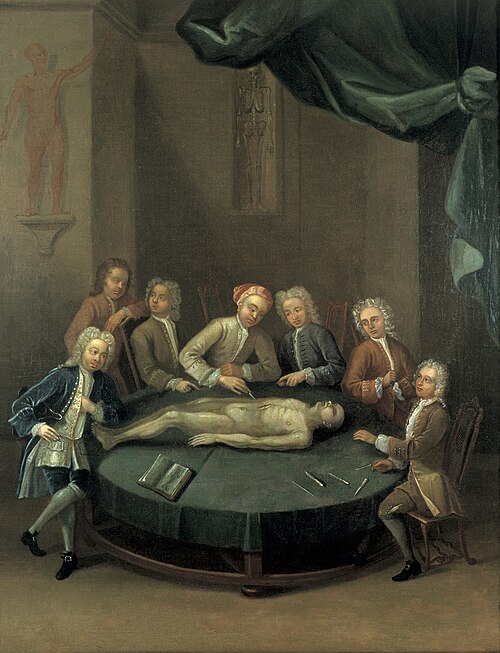
I come to this characterization of ethnographic cases because of my time in a teaching hospital, where clinicians and clinical residents presented thorny cases to their shared department in the hopes that they could come to some collective understanding of the case. Often, they presented the department staff with just the facts: what a patient’s symptoms were, what the social context of the patient was, and how the patient had been treated previously and to what effect. Rarely, cases were presented with an anticipated interpretation or resolution; instead, interpretation was something that was solicited from the group.
In that context, I’ve begun to wonder whether a similar approach to ethnographic writing might work: instead of expecting interpretation to come through isolated, scholarly attention to one’s ethnographic research, might collective rumination about other people’s ethnographic cases open up interpretive possibilities and aid in the writing process? Over this and two other posts, I articulate the Ethnographic Clinic as an experiment in ethnographic writing. This post lays out the first stage of this process: identifying and writing up a case (which echoes an earlier post about the 5-Page Dissertation); the second stage scales up from the individual case to contextualize it; and the third stage elaborates how to make an analytic turn to do the interpretive work that ethnographic writing requires.
Step One: Tell a Thorny Story
Every ethnographer has experiences during their fieldwork that stick with them and that they continue to think about without neat resolution. These experiences can be interviews, events or interactions, or observations of practices and processes. For the purpose of the Ethnographic Clinic, choose one thorny story and describe it in as much detail as possible. Withhold analysis. It can be as short or long as needed, with the aim of conveying to the audience only what they need to know to understand the case. Who was involved? Where in the world is it occurring? How do things unfold? The case, to the degree that it’s possible, should have a beginning and an ending, but what that consists of should be determined by the case itself.
The story should be temporally limited. That is, if there is a re-occurrence of the event or interaction, limit yourself to just one occurrence. If it is an interview, it shouldn’t be the whole interview, but only the parts that are key to the case.
Refuse analysis. If you’re tempted to start to explain anything, either contextually or analytically, stop. The aim is just to describe the case. Any analysis will disrupt the next step, so be sure to keep the case as empirically-focused as possible. If you need to, have someone else edit out any analytic or contextualizing work you do.
Step Two: Present the Case
Find a clinic. What that entails is bringing together several other ethnographers who are also working on cases that they can present to a shared audience (that they should also be part of). When you present the case, stick to the text. Then, spend time addressing audience questions and allowing the audience to reflect on the case. It may be useful to have someone else keep notes of this conversation and to audio record it as well. What contextual questions do people have? What do you need to tell them that they haven’t already learned from the case in order for the case to make sense? What kinds of theoretical connections are they making? How are they interpreting the case and to what end? What it is as case of, as far as they understand it, either within your work, their work, or the work of other scholars? Be sure to spend ample time with each case–maybe 30-40 minutes–and to not rush to ready conclusions, but to let the audience respond to the case and provoke your further reflection on the case.
Step Three: Outline Next Steps
From the clinical presentation, you should have a list of contextualizing information that your audience needs, theoretical points of connection and frameworks, and a growing sense of the other research you have done that this case connects to. Organize this as an outline with those three headings: contextualization needed, theoretical connections, and additional research. In the next stage, you’ll focus on the first and third of these elements in order to flesh out this first case. Approaching this outline as an enumerated list of what needs to be done is the most robust approach, as it will help guide you through the next stage of the writing process.
Stage two proceeds from here.


One thought on “The Ethnographic Clinic, Part 1: Presenting the Case”